Winnipeg Fine Art Fair 2026: A Platform for Local Artists
By Darren Smith, Arts Reporter
April 8, 2026
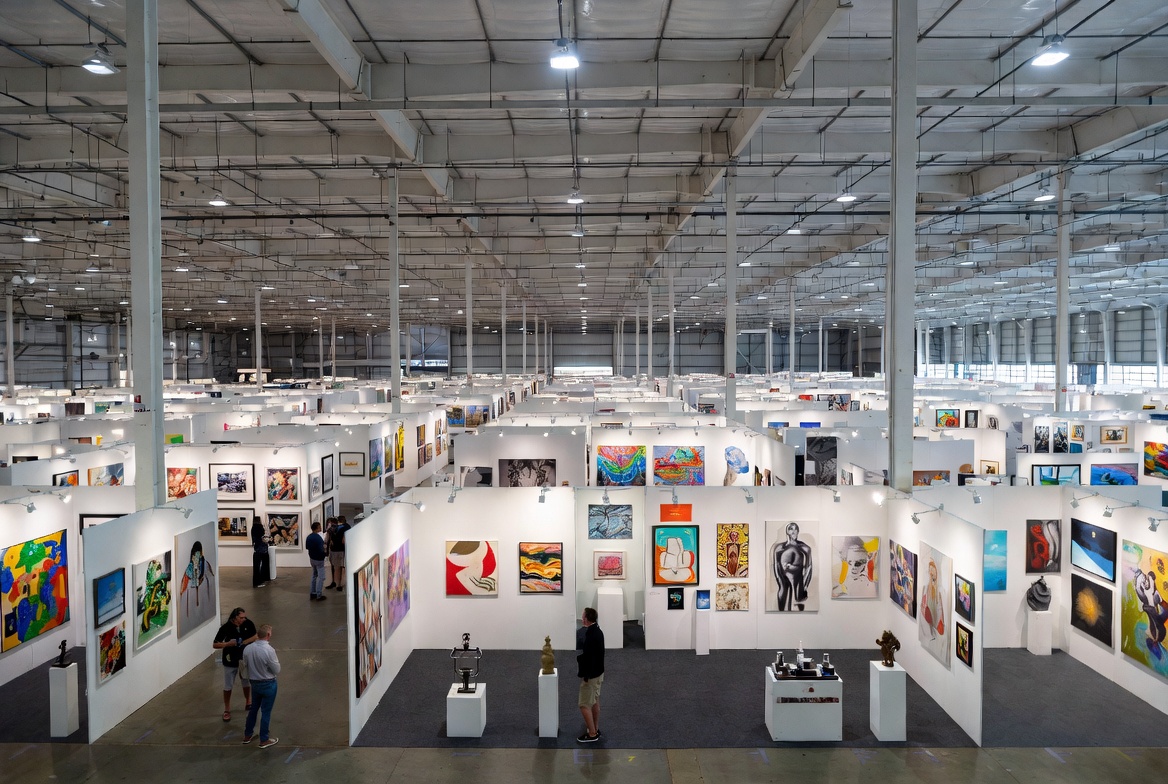
WINNIPEG — The third annual Winnipeg Fine Art Fair opens this weekend at Red River Exhibition Park with organizers touting nearly 80 juried artists working across mediums and an explicit rejection of curatorial restrictions. Promoted as a platform providing “key exhibition space” for local creators, the event positions itself as an inclusive alternative to gatekept institutions. Yet in a 2026 art market defined by risk aversion and concentration at the high end, the fair’s no-restrictions model raises immediate questions about quality control, buyer engagement, and actual economic outcomes for participating artists.
The fair runs April 10–12 at Exhibition Place in Red River Exhibition Park on Portage Avenue. Hours are Friday 4–9 pm, Saturday 10 am–6 pm, and Sunday 10 am–4 pm, with tickets available online or at the door. It remains a juried show-and-sale format focused on originals—no merch allowed—featuring painters, sculptors, and mixed-media practitioners primarily from Manitoba and surrounding areas. Acceptance requires reapplication each year; prior exhibitors receive no automatic entry. Organizers, operating as a nonprofit since 2023, emphasize diversity of backgrounds and media while highlighting community engagement and bursaries.
This open-door approach contrasts sharply with major fairs. The latest Art Basel and UBS Global Art Market Report 2026 notes that global art sales grew 4% in 2025 to an estimated $59.6 billion. Dealer sales rose modestly by 2% to $34.8 billion, while art fairs accounted for 35% of dealer turnover—the highest level since 2022. Growth favored established artists and high-end auctions, however. Mid-tier and regional segments faced persistent buyer caution and rising operational costs.

Nolan Kehler of Classic107 described the fair as giving artists “much-needed exhibition space” and a chance to show work directly to the local population. A participating artist echoed the sentiment, calling it a place to “meet the artist, hear the story.”
Skeptical voices within the Canadian scene push back. One independent Winnipeg-based collector, speaking on condition of anonymity due to ongoing local relationships, noted: “No curatorial restrictions sounds democratic, but it often results in wildly uneven quality. Buyers who attend these events are typically looking for accessible decorative pieces, not career-defining works. The real test is sell-through rates and whether any artists here build secondary-market traction in the next 12–24 months—history suggests most won’t.”
The contradiction is clear. Organizers celebrate inclusivity and “real stories” while the broader market in 2026 continues a structural rebalancing away from emerging and ultra-contemporary risk. Regional fairs like this rarely publish demographic breakdowns or post-event sales data. Absent transparent figures on average prices, lot sell-through, or artist follow-on opportunities, claims of “support” remain largely rhetorical. Who primarily benefits? Booth fees and ticket sales sustain the nonprofit operation and venue; artists cover their own production, travel, and display costs in hopes of direct sales that may not cover participation expenses.
Missing from the narrative is any rigorous tracking of long-term impact. Previous iterations in 2024 and 2025 generated local attendance but produced no widely documented breakout careers or notable auction entries for participants. In a recalibrating market where even mid-tier dealers report cost pressures, an unrestricted juried fair functions more as a community marketplace than a launchpad. It fills a genuine gap in exhibition access for artists ignored by larger institutions, yet risks commodifying participation without advancing professional standards or collector confidence.
The Winnipeg Fine Art Fair underscores a persistent tension in 2026: the proliferation of accessible platforms amid a market that rewards concentration and proven track records. Without verifiable sales metrics or career progression data from organizers, the event’s value remains tied more to short-term visibility than sustainable industry advancement. Regional fairs can provide breathing room, but they rarely disrupt the power dynamics that keep most artists on the margins.
Darren Smith is an Arts Reporter at Art Chain News covering contemporary art, digital art and NFTs, body art, and the intersections between these fields.
This article is based on direct examination of materials, market data, background interviews, and independent analysis.
