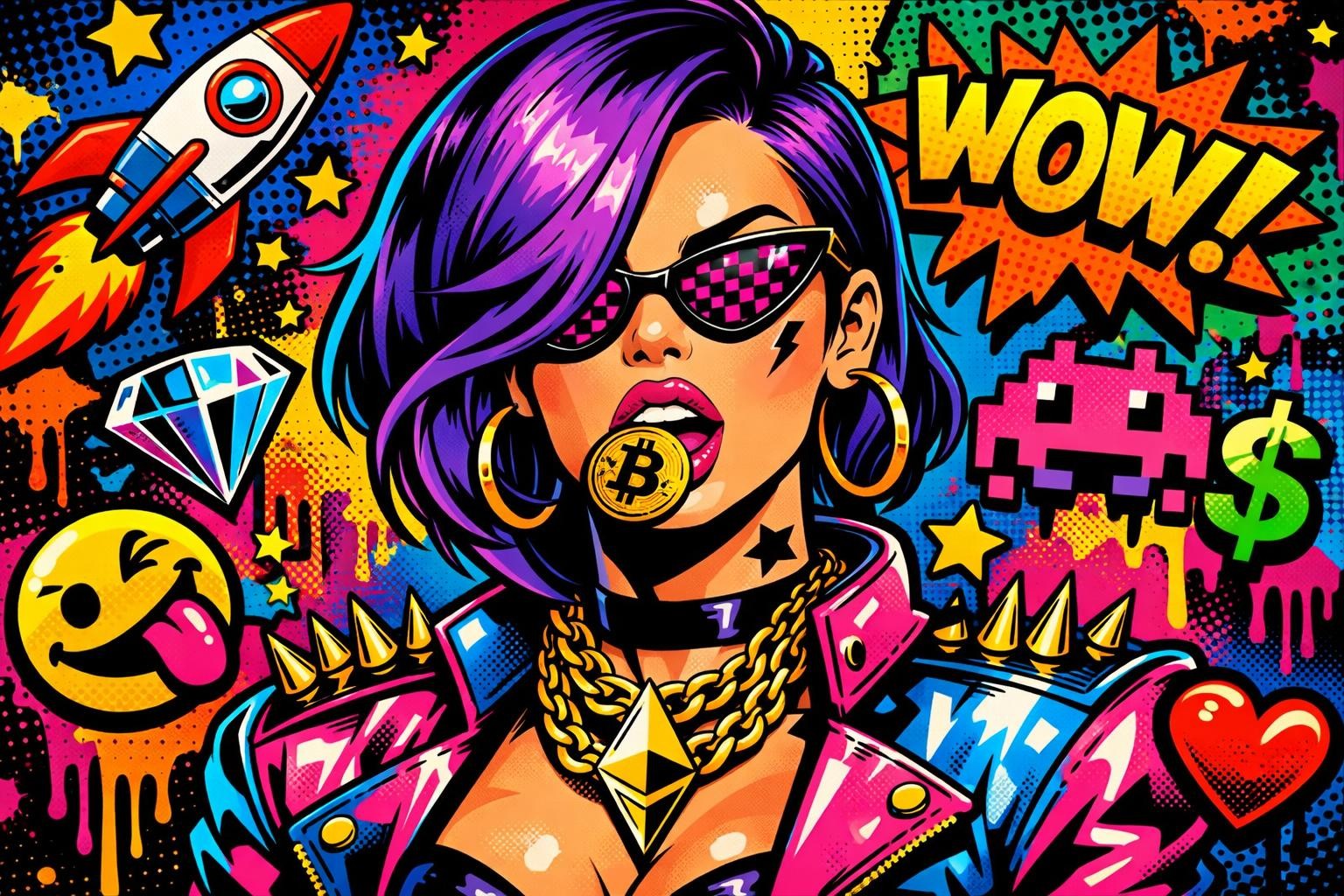
The Evolution of World of Women: From NFT Hype to Market Reality
By Darren Smith, Arts Reporter
NEW YORK — April 8, 2026
World of Women, the 10,000-piece NFT collection illustrated by Yam Karkai, launched in July 2021 as a direct response to the male-dominated early NFT market. Karkai, a digital illustrator who spotted the lack of relatable female representation amid booming PFP projects, hand-drew traits celebrating varied skin tones, ethnicities, and identities. The collection sold out in hours at 0.07 ETH mint price and quickly attracted celebrity attention, from Reese Witherspoon to Madonna collaborations. Yet five years later, as the broader NFT market has recalibrated, WoW’s secondary performance tells a more sobering story than its founding narrative of empowerment and onboarding.

Current data shows the World of Women floor price hovering around 0.156 ETH, or roughly $348–$350, with 24-hour trading volume often under 1 ETH and minimal sales activity. The collection’s market cap sits near $3.5 million, held by approximately 5,210 unique owners out of 10,000 supply. Peak floor reached over 13 ETH in early 2022 during the market frenzy; the drop reflects not isolated failure but the sector-wide contraction from hype-driven valuations to thin liquidity in 2026. Total historical volume once exceeded $100 million claims in promotional materials, but recent monthly figures have fallen to tens of thousands of dollars.
Karkai’s vibrant, graphic style—saturated colors, flat illustrations evoking commercial illustration more than critical contemporary practice—drove initial visibility. WoW secured high-profile placements: a Christie’s auction of a rare piece fetched $760,347 in 2022, appearances on Times Square billboards, Billboard covers, and partnerships with figures like Eva Longoria and talent manager Guy Oseary. The project expanded with World of Women Galaxy (22,222 additional NFTs) and emphasized full commercial rights for holders, artist spotlights, charity allocations (15% of some proceeds directed to causes), and community events.

A supportive voice from within the ecosystem highlights the project’s cultural footprint. One longtime NFT collector and women-in-web3 advocate noted, “WoW succeeded where many PFP drops failed by creating genuine community access and visibility for female and diverse creators who previously saw little entry point into crypto-native art circles.” This aligns with Karkai’s stated motivation: addressing the statistic that female artists accounted for roughly 5% of NFT sales volume in the project’s early window.
Yet independent market observers point to persistent gaps. An anonymous secondary-market specialist familiar with blue-chip PFP collections observed, “Representation rhetoric drove the narrative, but actual long-term value accrual has followed broader market gravity rather than sustained cultural impact. Many ‘onboarded’ holders entered during the bull run; post-peak, engagement metrics and sell-through rates for associated drops reveal the challenge of converting community into enduring collector demand.” Broader studies on NFT pricing have documented racial and trait-based disparities in early markets, raising questions about whether diversity-focused collections fully escaped speculative dynamics or simply reframed them.

Who benefits most in 2026? Early minters and celebrity-adjacent participants captured outsized gains during the 2021–2022 peak. Karkai transitioned from freelance illustrator to project co-founder with expanded visibility, while the team pursued metaverse experiments, merch, and ecosystem tools. Missing from the dominant story remains rigorous tracking of charity impact versus promotional volume, sustained artist onboarding metrics beyond initial hype, and how WoW’s model differs structurally from other PFP projects that also claimed inclusivity. The project’s shift toward additional layers (token experiments, expanded platforms) occurs against a 2026 landscape where NFT art faces competition from AI-generated works, institutional caution, and collector fatigue with generative avatars.
World of Women exposed real underrepresentation in early web3—female artist participation and diverse imagery were scarce. Yet its trajectory underscores a core contradiction: bold onboarding claims run against thin secondary liquidity and the difficulty of translating community sentiment into consistent market depth or critical artistic legacy. In the current recalibration, Karkai’s contribution stands as a case study in how representation initiatives intersect with speculative capital, where visibility gains do not always translate to structural power shifts or resilient valuation. View Collection
Darren Smith is an Arts Reporter at Art Chain News covering contemporary art, digital art and NFTs, body art, and the intersections between these fields.
This article is based on direct examination of materials, market data, background interviews, and independent analysis.


