
Hattiesburg Pocket Museum’s Miniature Worlds Redefine Public Art and Community Revitalization in the American South
By Darren Smith, Arts Reporter
April 14, 2026
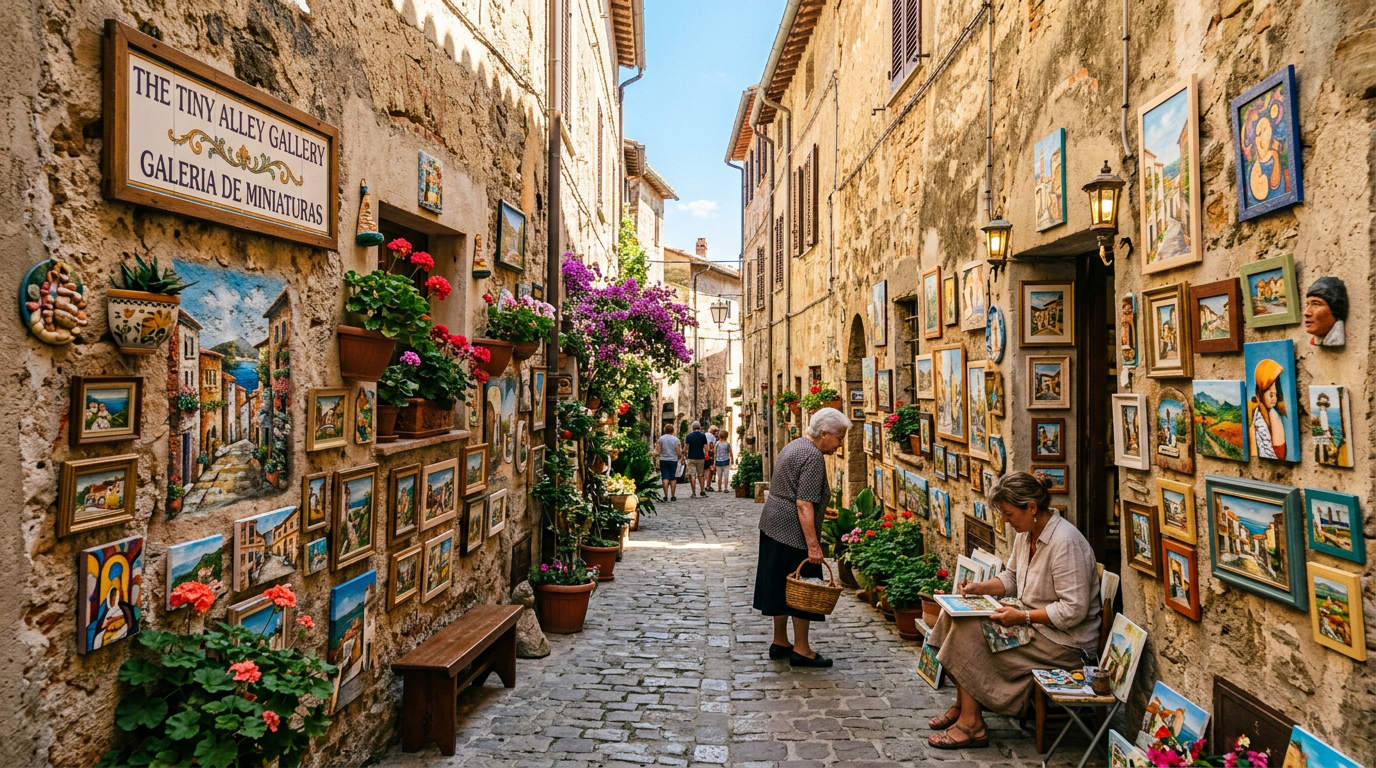
HATTIESBURG, Miss. — In a narrow, once-overlooked alley behind Hattiesburg’s historic Saenger Theater, a quiet revolution in contemporary public art has unfolded. Tiny figurines no larger than a fingernail canoe down painted drainage pipes, peer curiously over electrical boxes, and stage elaborate scenes in crevices and ledges. This is the Hattiesburg Pocket Museum, affectionately known as Mississippi’s Tiniest Museum, where miniature art installations have transformed an ordinary urban passageway into a surrealist wonderland that draws visitors to their knees—literally—in search of hidden delights.
What started as a modest pandemic response has blossomed into a major cultural attraction, drawing more than 300,000 visitors since its 2020 debut and contributing to a measurable surge in the city’s tourism economy. The project exemplifies how intimate, site-specific, and low-tech art interventions can reclaim public space, foster community engagement, and spark broader conversations about accessibility in the visual arts at a time when large-scale institutional exhibitions and digital spectacles often dominate headlines.
Vicki Taylor, the driving creative force and assistant curator, works from a cramped backroom workshop adjacent to the theater. There, she meticulously assembles and paints the miniature figures and dioramas that populate the alley. “It is the average alley that is in everyone’s town,” Taylor explained in a recent interview. “It just took looking at it in a different way to envision what it could be.”
Her husband, Rick Taylor, executive director of the Hattiesburg Convention Commission—which oversees the museum, the theater, and related initiatives—collaborated closely on the vision. The couple launched the initial window display in August 2020 as COVID-19 shutdowns emptied downtown streets. Their goal was simple yet profound: inject joy, encourage foot traffic, and remind residents and visitors alike to look closer at their surroundings.

Today, the Hattiesburg Pocket Museum extends far beyond that original glass case. The alley features rotating miniature dioramas, vibrant murals, interactive elements like a rainbow bridge memorial for lost pets, a keychain and DVD exchange, and even a motion-activated disco area with flashing lights. A tiny art gallery (housed in a renovated newspaper stand) and a pocket theater showing short films complement the outdoor experience, creating a multifaceted, ever-evolving cultural hub in one of Mississippi’s most vibrant small cities.
The artistic contributions extend well beyond the Taylors’ miniatures. Mississippi artist Lissa Ortego has installed multiple works, including “Mice in Peril,” “Why Can’t We Be Friends,” “Abbey Road – in 3D,” “Hub City Chasm – in 3D,” “Nothing but Bubble,” “Rubber Duckie,” “Save the Narwhal,” and “Be BRAVE Little One.” In 2022, Gabby Smith added “Something’s Fishy” and “Bugs in the Burg.” Street artist Damian Guerrero contributed “Let it Go” and “Fox in the Wind,” while a Kelsey Montague mural adorns the nearby city parking garage. Mother-daughter duo Colbey and Aubri Sparkman brought color to utility boxes with “Peace, Love and the Hub” and “Detective McDroppings on the Case.” Artist River Prince created the “Let’s Connect Skybridge,” a whimsical Lego installation complete with tiny rock climbers.
These layered contributions turn functional infrastructure—pipes, meters, walls, and skywalks—into canvases, blending folk art sensibilities, street art techniques, and narrative miniature storytelling. The result is a scavenger-hunt dynamic that rewards repeated visits, as new scenes appear weekly and hidden details reward patient observation. Thirteen resident “alley cats” (some painted, some sculpted) add another layer of playful continuity.
The impact has been tangible. According to the Hattiesburg Convention Commission and Visit Hattiesburg, the museum has coincided with more than a 40% increase in the city’s tourism economy in recent years. In 2024 alone, Hattiesburg recorded $604 million in direct visitor spending, part of a 39% growth in tourism visitation over five years. Marlo Dorsey, CEO of Visit Hattiesburg, has credited unique cultural attractions like the Pocket Museum—alongside the city’s broader mural initiative aiming for 100 public works—with helping position Hattiesburg as an emerging arts destination in the Gulf South.

This success story arrives at a pivotal moment in contemporary art discourse. As museums grapple with attendance challenges and debates rage over the role of public funding and institutional gatekeeping, grassroots projects like this demonstrate the democratizing power of accessible art. In an era increasingly shaped by digital and generative practices—where NFTs and immersive new media command attention and market value—the Hattiesburg Pocket Museum offers a counterpoint rooted in physical presence, tactile discovery, and unmediated human connection.
Miniature art, while often dismissed as craft or novelty, carries a rich historical lineage from Renaissance curiosity cabinets and Victorian dollhouses to contemporary practitioners who use scale to challenge perception. Here, the tiny scale forces viewers to slow down, crouch, and engage intimately with their environment—qualities increasingly rare in fast-paced, screen-mediated experiences. The alley’s transformation also echoes site-specific traditions seen in artists like Christo and Jeanne-Claude or more localized interventions by figures in the public art realm, but with a distinctly Southern, community-driven humility.
Critics and cultural observers note that such projects can bridge divides in smaller cities where traditional arts infrastructure may be limited. Hattiesburg, known as the Hub City, lacks the coastal glamour or mountain vistas of other Southern destinations; its appeal lies in cultural ingenuity. The Pocket Museum encourages exploration of “side streets, back alleys, dirt roads, and nooks and crannies,” as the museum’s own mission statement puts it, fostering a spirit of curiosity that extends beyond the alley itself.
For local artists, participation has provided visibility and validation. Emerging and mid-career creators gain exposure in a high-traffic public setting without the barriers of gallery representation. The DIY ethos—weekly updates, open calls for submissions, and collaborative elements—resonates with broader trends in participatory and relational aesthetics, where the audience co-creates meaning through discovery.
Yet the project is not without its quiet challenges. Maintaining the installations in an outdoor alley requires constant upkeep against weather, vandalism risks, and the practicalities of a small-team operation. Funding relies on donations, volunteer efforts, and institutional support from the Convention Commission. Taylor has spoken about the labor-intensive nature of crafting each tiny figure by hand, a process that demands precision and patience in an age of rapid digital production.
Despite these hurdles, the museum continues to evolve. Recent exhibits have explored themes of “second chances” and resilience, mirroring the alley’s own journey from a “gray, smelly” passageway to a celebrated destination. Visitors, including families with young children, report repeated visits and a sense of wonder that transcends age or background. One local parent described watching her children methodically search for hidden cats and figurines as a highlight of their downtown outings.
In the wider context of Art Chain News’ coverage, the Hattiesburg Pocket Museum invites reflection on intersections between traditional craft, public intervention, and contemporary concerns. While not explicitly digital or body-focused, its emphasis on iteration, surprise, and viewer participation parallels generative art practices and the way tattoo and modification artists treat the body as a living canvas—both invite close, repeated looking and personal discovery.
As Hattiesburg pushes forward with public art initiatives, including the Hattiesburg Alliance for Public Art’s efforts to expand murals and sculptures, the Pocket Museum stands as a proof-of-concept: profound artistic experiences need not require grand budgets or institutional prestige. Sometimes, a narrow alley, a handful of miniatures, and a willingness to look differently suffice.
For those planning a visit, the alley is located downtown near the intersection of Main and Forrest Streets, behind the parking garage. Exhibits change frequently, and the museum encourages multiple passes to catch every detail. In a world saturated with spectacle, this tiny wonderland reminds us that the most memorable art often hides in plain sight—if only we take the time to notice.
Darren Smith is an Arts Reporter at Art Chain News covering contemporary art, digital art and NFTs, body art, and the intersections between these fields.
This article is based on exhibition statements, direct reporting, institutional analysis, and on-site observations.
