Trump’s 250-Foot Triumph: The New Arch in D.C.
By Darren Smith, Arts Reporter
April 14, 2026
The U.S. Commission of Fine Arts voted today to advance President Donald Trump’s ambitious proposal for a 250-foot “Victory Arch,” also known as the United States Triumphal Arch, on Columbia Island in Washington, D.C. The decision clears a key aesthetic review hurdle for the monument, which the administration touts as a celebration of America’s 250th anniversary of independence.
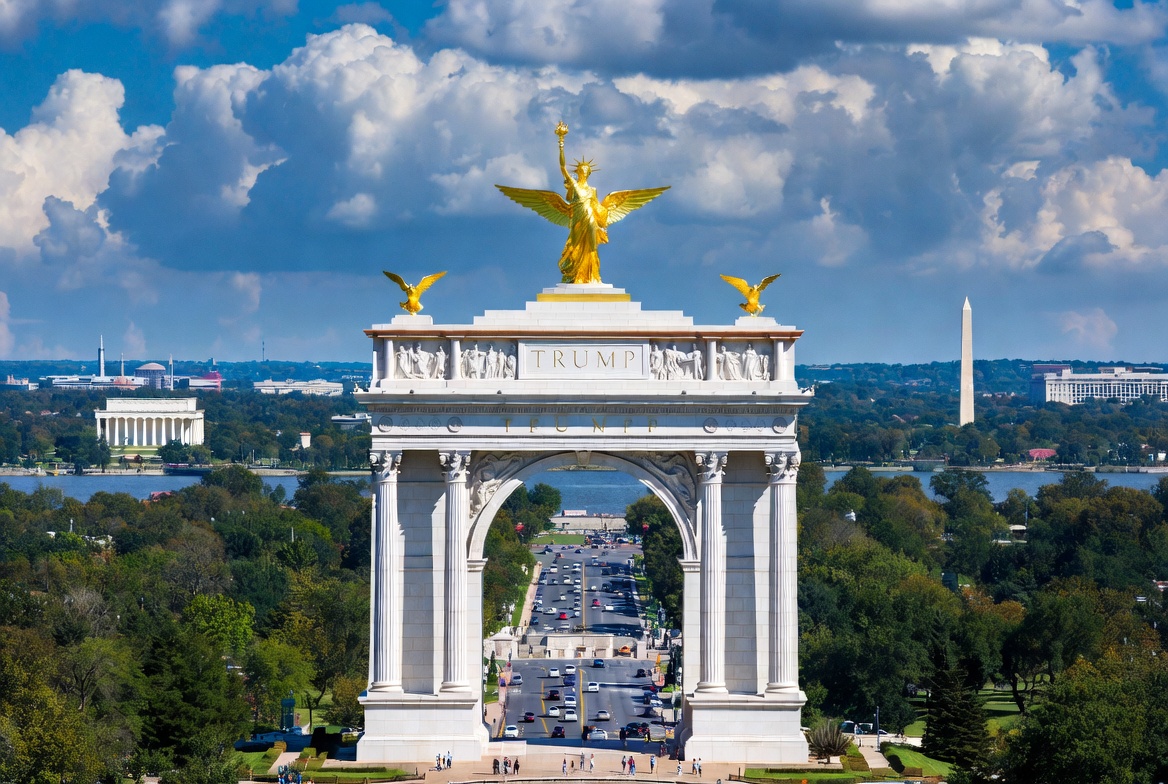
The proposed structure, designed by Harrison Design, would rise 250 feet tall—more than twice the height of the nearby Lincoln Memorial—positioned at Memorial Circle near Arlington National Cemetery and the Potomac River. Renderings show a classical white arch topped with a 60-foot gilded winged Lady Liberty figure holding a torch, flanked by two 24-foot golden eagles. Inscriptions include “One Nation Under God” and “Liberty and Justice for All.” The main archway spans 55 feet wide, sufficient for multiple lanes of traffic, with additional sculptural elements and decorative reliefs honoring American history.

The Commission of Fine Arts, an independent federal body responsible for advising on design and aesthetics in the nation’s capital, conducted its review during its April 16 meeting. All seven current members were appointed by President Trump following the dismissal of previous commissioners in late 2025. The vote to move the project forward was widely anticipated given the panel’s composition.
White House officials described the arch as a bold symbol of national triumph and resilience. Press Secretary Karoline Leavitt highlighted the design’s classical proportions and its role in marking the Semiquincentennial. President Trump has called the monument “the greatest and most beautiful triumphal arch anywhere in the world,” emphasizing its scale as a fitting tribute to 250 years of American achievement.
Critics, including some classical architects, veterans’ groups, and historic preservation advocates, argue the structure’s massive size would overwhelm the surrounding landscape. They warn it could obstruct views between Arlington National Cemetery and the Lincoln Memorial, altering one of the capital’s most solemn sightlines. Opponents have raised concerns about visual dominance over existing monuments and potential impacts on the National Park Service-managed site.

The project draws inspiration from historical triumphal arches, such as Paris’s Arc de Triomphe, but at a significantly larger scale. Comparative diagrams show the 250-foot proposal dwarfing the 164-foot Parisian landmark.

The Commission’s approval focuses on design aesthetics and does not constitute final authorization. Additional reviews by the National Capital Planning Commission, potential environmental assessments, congressional funding considerations, and possible legal challenges remain ahead. Construction timelines and costs have not been finalized, though early estimates suggest a multi-year endeavor.
Supporters view the arch as a powerful addition to Washington’s monumental core, continuing a tradition of grand civic architecture. Detractors question whether such a project aligns with the dignified restraint traditionally associated with the National Mall area.

This development reflects ongoing debates about public art, national memory, and the role of monumental architecture in shaping collective identity. As the proposal advances, stakeholders on all sides will continue to weigh its artistic merit against its environmental and historical context.
Darren Smith is an Arts Reporter at Art Chain News covering contemporary art, digital art and NFTs, body art, and the intersections between these fields.
