
Tiffany’s Boyd Window: A Rare Auction Gem with Historical Roots
By Darren Smith, Arts Reporter
April 21, 2026
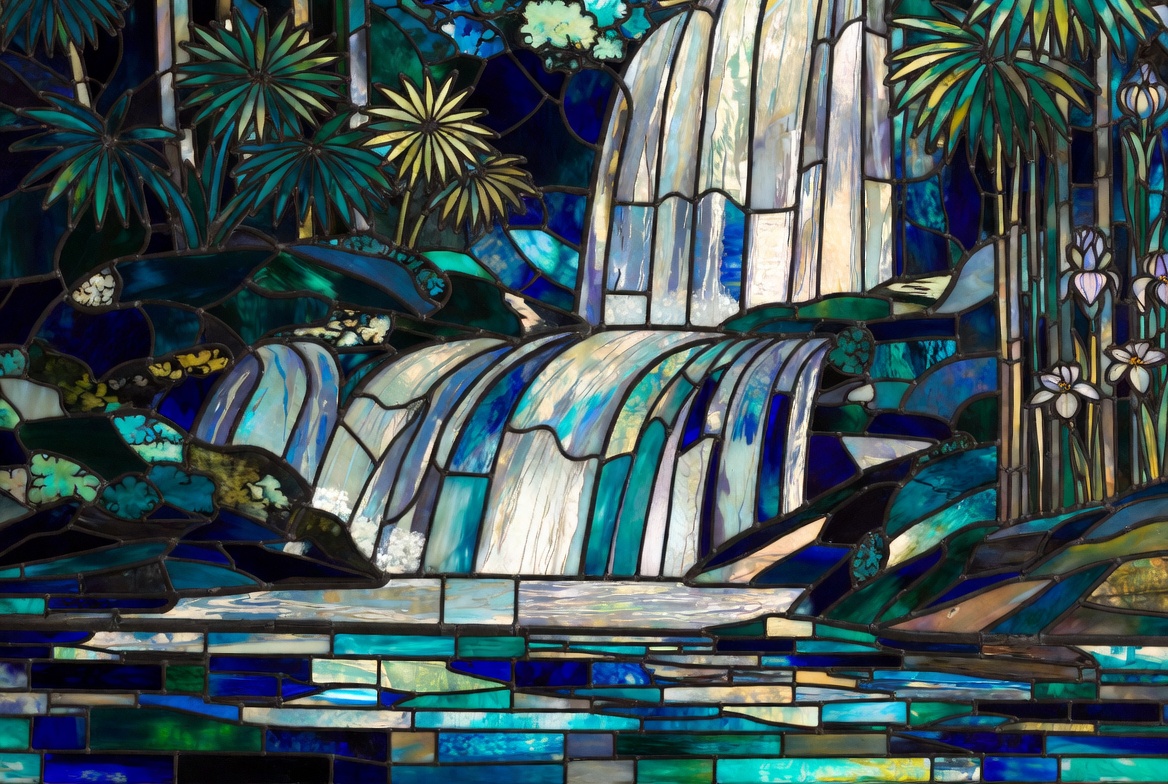
Los Angeles — April 21, 2026 — A cascade of light frozen in glass is about to leave its quiet sanctuary. For 125 years, The Boyd Family Memorial Window (The Falls) has bathed the interior of Second Congregational Church in Winsted, Connecticut, in shifting hues of cobalt, emerald, and gold as sunlight poured through its intricate panes. Now, this rare Tiffany Studios landscape—featuring a dramatic foreground waterfall—will headline Christie’s Design auction on June 10 at Rockefeller Center, with an estimate of $1.5 million to $2 million. Proceeds will support the church’s ongoing mission and ministries.
In an era when digital art and NFTs dominate headlines, the emergence of a museum-quality ecclesiastical Tiffany window underscores the enduring power of traditional craft. This is not merely another decorative object entering the secondary market. It is a testament to how light, memory, and masterful technique continue to captivate collectors, institutions, and contemporary artists alike. As stained glass experiences a broader resurgence in interior design trends for 2026, the Boyd window arrives at a pivotal moment.
The Window’s Creation and Historical Context
Commissioned in 1898 by Ellen Wright Boyd in memory of her parents, John Boyd (1799–1881) and Emily Webster Beers Boyd (1805–1842), the window reflects deep local roots in Winchester, Connecticut. John Boyd was a prominent figure—a politician and author of Annals and Family Records of Winchester (1873), a key historical text on the town’s early settlers. The Hartford Courant reported in September 1899 that the window was “intended to embody the things most loved by Mr. Boyd,” evoking the natural beauty of the region he cherished.
Installed in 1899, the piece measures as a substantial ecclesiastical window, its composition centering on a powerful waterfall tumbling over rocky outcrops. This placement of the falls in the foreground is exceptionally rare in Tiffany’s landscape windows, which more commonly featured distant vistas or floral borders. Surrounding the cascade are voluminous palms with rippled glass fronds, alongside tall stalks of lilies and irises rendered in plated confetti and richly mottled glass. Acid-etched cobalt elements add atmospheric depth, while layered “streaky” and textured glass captures the dynamic motion and luminosity of flowing water.
Tiffany Studios, under Louis Comfort Tiffany, revolutionized American stained glass in the late 19th and early 20th centuries. Drawing from European traditions but infusing them with innovative American techniques—such as favrile glass, plating (layering multiple sheets for richer color and texture), and the use of confetti and ripple effects—the studio produced works that blurred the line between craft and fine art. Unlike traditional painted glass, Tiffany emphasized the inherent qualities of the material itself, allowing light to interact directly with opalescent and iridescent surfaces.
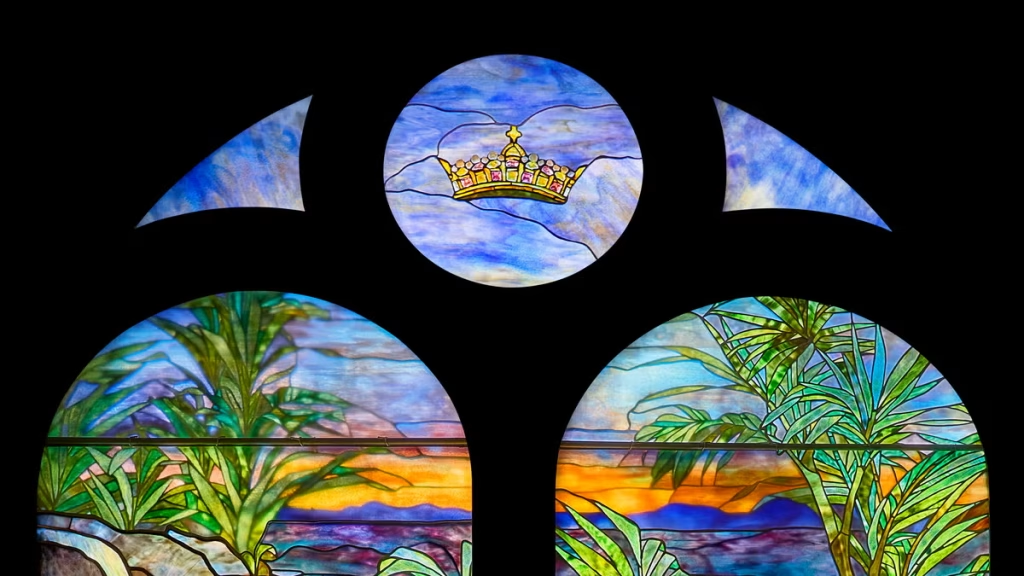
As a practicing artist and tattooist with over 26 years in the field, I often draw parallels between the permanence of stained glass and the enduring marks we make on skin. Both mediums transform light and narrative into something tangible and lasting. A tattoo artist layering ink for depth and flow mirrors the Tiffany artisans who plated glass sheets to achieve three-dimensional illusion in two dimensions. The Boyd window’s waterfall, with its sense of perpetual motion captured forever, resonates with that same pursuit of freezing vitality.
Technical Brilliance and Artistic Significance
What sets this window apart is its technical ambition. Tiffany Studios employed a palette of specialty glasses: streaky glass for the water’s varying translucency, mottled and rippled varieties for organic texture in foliage, and confetti glass for subtle sparkle in the floral elements. The acid-etching on cobalt sections creates a sense of atmospheric haze, enhancing the landscape’s depth. Palms and irises frame the scene with exotic flair, blending naturalistic observation with the aesthetic influences of the Aesthetic Movement and Japonisme that Tiffany embraced.
Landscape windows were less common in Tiffany’s ecclesiastical output than figural or floral designs, making The Falls a standout. It transforms a memorial into a living evocation of nature’s power and serenity—qualities that likely comforted congregants for generations. In the context of 1890s America, such a commission spoke to wealth, piety, and a romantic attachment to the American landscape amid rapid industrialization.
Comparisons to other major Tiffany windows highlight its rarity. Recent record-breaking sales include the Danner Memorial Window, which fetched $12.48 million at Sotheby’s in late 2024—an auction first for a Tiffany Studios work in a major evening sale. That piece, with its fruit-laden trees and glowing sunset, demonstrated similar painterly effects through glass. Other high-profile ecclesiastical examples have also commanded seven figures, signaling strong institutional and private demand for provenance-rich pieces with intact history.

Market Implications in 2026
The Boyd window enters a Tiffany market that has shown remarkable resilience and growth. While lamps and smaller decorative objects have long driven sales, large-scale windows—especially those with strong provenance and narrative depth—are increasingly viewed as blue-chip investments. Christie’s Design auction on June 10 will test appetite amid a broader decorative arts resurgence.
Recent trends support optimism. In 2025–2026, Tiffany lighting has led multiple auctions, with exceptional pieces exceeding estimates. The global stained-glass market itself is projected to expand significantly, driven by restoration projects, luxury interiors, and a cultural shift toward maximalism and artisanal craftsmanship in 2026 design forecasts. Collectors seeking alternatives to mass-produced décor are rediscovering the tactile, light-dependent qualities of traditional glasswork.
For the church, deaccessioning represents a pragmatic choice: preserving its mission while allowing the artwork to find a new steward—potentially a museum or private collector equipped for proper conservation and display. Replicas or protective measures for remaining ecclesiastical glass are increasingly common in such cases.
From a collecting standpoint, this sale offers opportunities beyond pure investment. Institutions like the Metropolitan Museum of Art have actively acquired Tiffany windows in recent years to enhance their American wings. Private buyers may integrate the piece into high-end residential or corporate settings, where its scale and luminosity create immersive environments. In the Web3 and digital art space, we see growing interest in “phygital” experiences—scanning or tokenizing physical artworks for NFT-linked provenance or virtual exhibitions. While the Boyd window itself is analog, its sale could spark conversations about bridging traditional craft with blockchain-verified ownership histories, much as tattoo artists now document custom work through digital ledgers.
Intersections with Contemporary Art Practices
As someone who has spent decades working with ink on skin, I see profound connections between Tiffany’s glass innovations and modern body art. Both involve layering for depth—Tiffany with translucent sheets, tattooists with pigment saturation and negative space. The way light interacts with the Boyd window’s surfaces, creating ever-changing effects throughout the day, parallels how a well-executed tattoo evolves with the body’s movement and ambient lighting.
In the digital realm, artists using generative tools or AI to simulate light refraction in virtual stained glass draw indirect inspiration from Tiffany techniques. NFT projects exploring luminosity, permanence, and memory could find conceptual kinship here. Meanwhile, contemporary tattooists incorporating Art Nouveau motifs or landscape elements into large-scale pieces echo the organic fluidity seen in this window.
The sale also prompts reflection on cultural stewardship. Churches have historically been custodians of significant art, but economic realities sometimes necessitate change. How do we balance preservation of sacred contexts with the realities of maintenance and mission funding? This case offers a model: transparent deaccession with clear community benefit.

Looking Ahead: Light, Legacy, and the Future of Craft
The impending auction of the Boyd Family Memorial Window (The Falls) is more than a market event. It is a moment to reconsider the value we place on objects that have witnessed history—baptisms, weddings, funerals, quiet moments of contemplation—while transforming everyday light into something transcendent.
In 2026, as maximalist and artisanal trends gain momentum alongside digital innovation, pieces like this remind us that true luminosity comes from material mastery, not pixels alone. Collectors, museums, and designers will watch the June 10 sale closely. Will it set a new benchmark for landscape windows? How might its new home influence public access or conservation standards?

For the art ecosystem—spanning traditional fine art, emerging Web3 interpretations, and even body modification practices—the window’s journey from church sanctuary to auction block invites us to ask: What stories do we choose to illuminate next, and how will we ensure their light endures?
Whether acquired by an institution for public viewing or a private collector for intimate appreciation, The Falls will continue its work of turning light into landscape, memory into beauty. In that sense, its legacy, like the cascading water it depicts, remains in perpetual, luminous motion.
Darren Smith is an arts journalist, practicing artist, and tattooist with 26+ years of experience across traditional, digital, and body art practices. He covers the intersections of craft, culture, and collecting for ArtChain News.
