Julia Stoschek: A Visionary Collector Pivots Toward a Global Stage
By Darren Smith, Arts Reporter
April 25, 2026
In a significant shift for one of the art world’s most dedicated champions of time-based media, the Julia Stoschek Foundation has announced it will close its prominent Berlin exhibition space at the end of October 2026. After a decade of presenting cutting-edge video, film, performance, and virtual reality works, the foundation is embarking on a “strategic realignment” that prioritizes international projects and the renovation of its original Düsseldorf headquarters.
The decision, shared via the foundation’s official channels, marks the end of an era for Berlin’s cultural scene while underscoring Stoschek’s evolving commitment to making her extraordinary collection accessible on a broader, global scale.
From Automotive Heir to Pioneering Patron
Julia Stoschek, born in 1975 in Coburg, Germany, grew up in a prominent industrial family as an active shareholder in the Brose Group, a leading automotive parts supplier. She began building her collection in earnest around 2003–2004 after a transformative encounter with Douglas Gordon’s Play Dead; Real Time at Gagosian in New York. The durational video work, featuring a horse filmed in slow motion from multiple angles, sparked her deep interest in time-based media. Stoschek has long emphasized that she collects not for private display but to create public platforms for encounter and discovery.
Today, the Julia Stoschek Collection comprises more than 900 works by approximately 300 artists, spanning from the 1960s to the present. It focuses intensely on time-based media—including single- and multi-channel video installations, film, performance documentation, sound pieces, internet-based works, and emerging virtual and augmented reality projects. Key figures represented include pioneers such as Nam June Paik, Bruce Nauman, Carolee Schneemann, Joan Jonas, and Marina Abramović, alongside contemporary voices like Arthur Jafa, Hito Steyerl, Mark Leckey, Pipilotti Rist, Ed Atkins, and Wu Tsang.

Building Dedicated Spaces for Moving Images
Stoschek opened her first public space in Düsseldorf in 2007, transforming a historic industrial building into a venue tailored for time-based art. In 2016, she expanded to Berlin, occupying a roughly 3,000-square-meter former Czech Cultural Center on Leipziger Straße. Over the past decade, the Berlin location hosted 22 solo and group exhibitions and welcomed hundreds of thousands of visitors through rigorous programming and public events.
Highlights have included solo shows by Arthur Jafa, Meriem Bennani, and the ongoing presentation of Mark Leckey’s Enter Thru Medieval Wounds (on view through July 5, 2026). The foundation has also prioritized conservation, digitization, and public access. Selected works are freely available through the Video Lounge on its website, reflecting a commitment to democratizing access to technically complex artworks.

International Ambitions and Recent Triumphs
The Berlin closure does not signal retreat but expansion. The foundation’s Düsseldorf headquarters will undergo extensive renovations and is scheduled to reopen in April 2027, coinciding with the collection’s 20th anniversary. In the interim, activities will continue in public spaces across Düsseldorf, with a stronger emphasis on international presentations and traveling exhibitions.
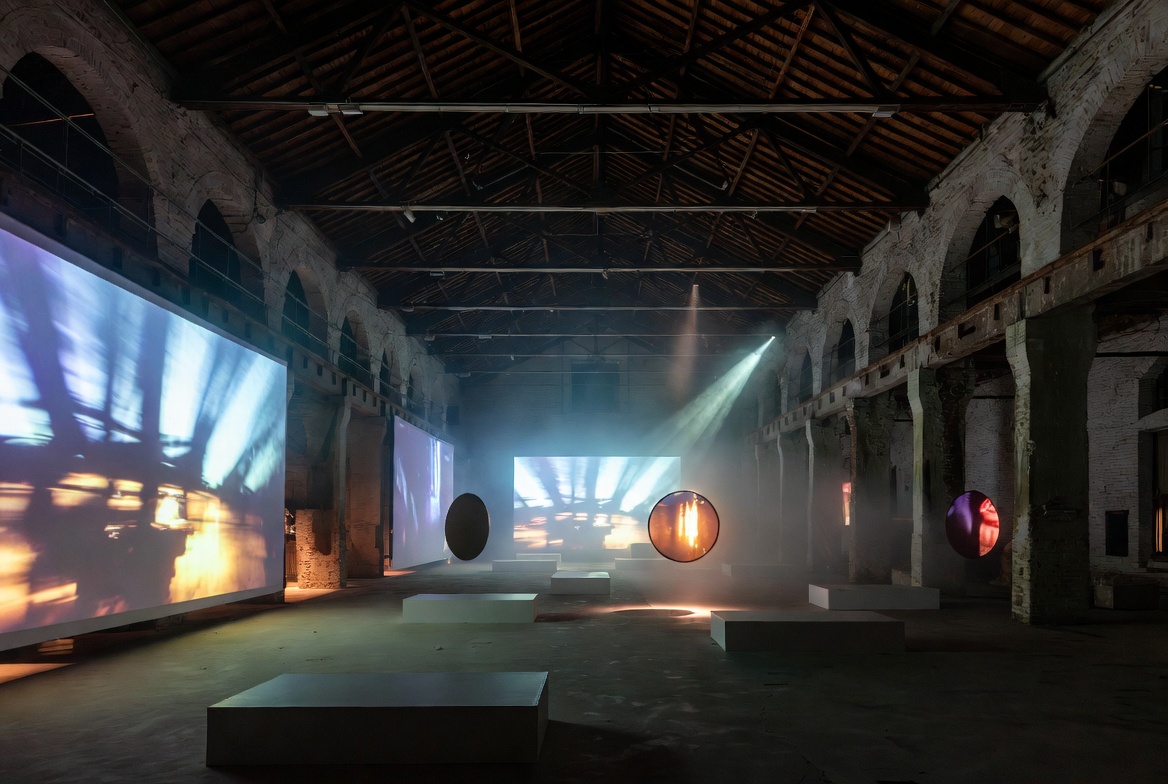
A major milestone was the first significant U.S. presentation, “What a Wonderful World: An Audiovisual Poem,” edited by Udo Kittelmann and held at Los Angeles’ historic Variety Arts Theater from February 6 to March 20, 2026. The exhibition transformed the decaying 1920s venue into an immersive environment featuring works by artists including Marina Abramović, Douglas Gordon, Arthur Jafa, Dara Birnbaum, Cyprien Gaillard, and others, creating poetic dialogues across more than a century of moving images.

A Legacy of Accessibility and Innovation
Stoschek’s model stands out for its commitment to public access and responsible stewardship of technically complex works. The foundation has invested in specialized conservation and digitization efforts, making selected pieces freely available online. Her support for emerging technologies, including VR and AR collaborations, reflects a forward-looking vision that embraces the evolving language of contemporary art.
This strategic pivot—from maintaining multiple fixed venues to optimizing resources for broader reach—allows greater flexibility for traveling exhibitions, institutional partnerships, and enhanced digital initiatives.
End of an Era, Beginning of a New Chapter
As the lights dim on Leipziger Straße this October, Berlin will lose a vital dedicated space for time-based media. Yet the broader art ecosystem stands to gain from Stoschek’s renewed global focus. Her meticulously assembled collection continues to challenge viewers to engage deeply with art that unfolds over time, demanding sustained attention in an age of fleeting images.

Julia Stoschek has built not just a collection, but enduring platforms for encounter, preservation, and discovery. In optimizing her resources for maximum impact, she reaffirms her position as one of the most influential patrons of time-based art in the 21st century.
What are your thoughts on the future of private foundations in the art world? Have you visited the Julia Stoschek Foundation spaces or experienced one of their exhibitions? Share your perspectives in the comments below. Explore the full collection and Video Lounge at jsfoundation.art. Discover more about the Berlin space and its programming at jsfoundation.art/berlin. Learn about the upcoming Düsseldorf reopening and 20th anniversary plans at jsfoundation.art/dusseldorf. View details and images from the landmark Los Angeles exhibition at jsf.la. For those planning a visit, find practical information and opening hours before the October closure at jsfoundation.art/visit.
Darren Smith is an arts journalist, practicing artist, and tattooist with 26+ years of experience across traditional, digital, and body art practices. He covers the intersections of craft, culture, and collecting for ArtChain News


