The Impact of Michael Armitage on Contemporary Art
By Darren Smith, Arts Reporter
April 29, 2026
VENICE — Kenyan-British painter Michael Armitage has emerged as one of the most compelling voices in contemporary art with the ongoing presentation of his sweeping mid-career exhibition, “The Promise of Change,” at Palazzo Grassi. Presented by the Pinault Collection, the show offers a profound dialogue between East African realities and Western European art traditions, blending mythology, social commentary, and technical innovation.

At 42, Armitage commands attention for the depth and ambition of his practice. Born in Nairobi in 1984 to an English accountant father and a Kenyan mother of Kikuyu descent, he spent his formative years in Kenya before pursuing art education in London. He received his BFA from the Slade School of Fine Art in 2007 and a postgraduate diploma from the Royal Academy Schools in 2010. Today, he divides his time between Nairobi and London, channeling personal and collective histories into luminous, often unsettling canvases.
The exhibition, on view from March 29, 2026, through January 10, 2027, features over 45 paintings and more than 100 preparatory drawings spanning the past decade. Curated by Jean-Marie Gallais of the Pinault Collection, with Hans-Ulrich Obrist contributing to the catalogue, it highlights Armitage’s signature use of lubugo—a traditional Ugandan bark cloth made from fig trees. This textured, irregular substrate rejects the colonial associations of Western canvas and actively shapes the composition.
Armitage’s works move fluidly between crisp figuration and hallucinatory abstraction. In major pieces such as Dandora (Xala, Musicians) (2022), vibrant scenes of Kenyan life merge with references to European Old Masters and East African folklore. Monkeys, symbolic in regional storytelling, frequently appear alongside human figures caught in moments of protest, migration, or quiet resilience. His intense palette renders political tension and everyday beauty with equal power.

“It’s a bit like being weighed and measured when you have an exhibition of this scale,” Armitage has reflected on the pressure of such surveys. The show demonstrates his deep engagement with art history, mythology, and the blurred boundaries between dream and documentary. Large-format works address global issues — conflict, environmental crisis, and cultural hybridity — while remaining rooted in Kenyan experience.
Beyond painting, Armitage’s influence extends to institution-building. In 2020, he founded the Nairobi Contemporary Art Institute (NCAI), a nonprofit platform dedicated to supporting East African artists and fostering critical dialogue. His election as a Royal Academician in 2021 further affirms his stature.
Critics have praised the Palazzo Grassi presentation as a landmark. The exhibition arrives amid heightened global interest in African contemporary voices, especially with preparations for the 2026 Venice Biennale. Armitage’s nuanced practice offers complexity rather than simplification.

Technical mastery defines his approach. Oil on lubugo creates unpredictable textures — cracks, absorptions, and resistances — that mirror the fragility and resilience of his subjects. Preparatory drawings reveal meticulous planning, yet the final works retain emotional spontaneity. Themes of migration appear in turbulent seascapes that evoke contemporary crises while echoing historical voyages.
Armitage’s career reflects broader shifts in the art world. After early recognition for politically charged works addressing Kenyan elections and social issues, he has expanded into more introspective territory, exploring human creativity across time. This evolution positions him as a bridge between continents and eras.
The Pinault Collection’s major presentation signals strong confidence in Armitage’s lasting impact. Palazzo Grassi, a historic Venetian landmark, provides an ideal stage for his East-West synthesis, with the building’s architecture enhancing the works’ narrative power.
As climate anxieties and geopolitical tensions continue, Armitage’s art feels urgently relevant. His paintings invite viewers into ambiguous spaces where beauty and unease coexist, fulfilling painting’s enduring promise — to change how we see the world.
Michael Armitage: The Promise of Change stands as a major achievement, cementing the artist’s place among today’s essential figures. For those unable to travel to Venice, the accompanying publication offers rich context.
Explore the exhibition at Palazzo Grassi. Discover Armitage’s practice via White Cube. Read more at David Zwirner. Learn about his foundation work at NCAI.
What are your thoughts on Armitage’s fusion of African and European traditions? Share in the comments or visit the exhibition in Venice before January 2027. Support emerging voices by engaging with platforms like NCAI and contemporary art from the Global South.
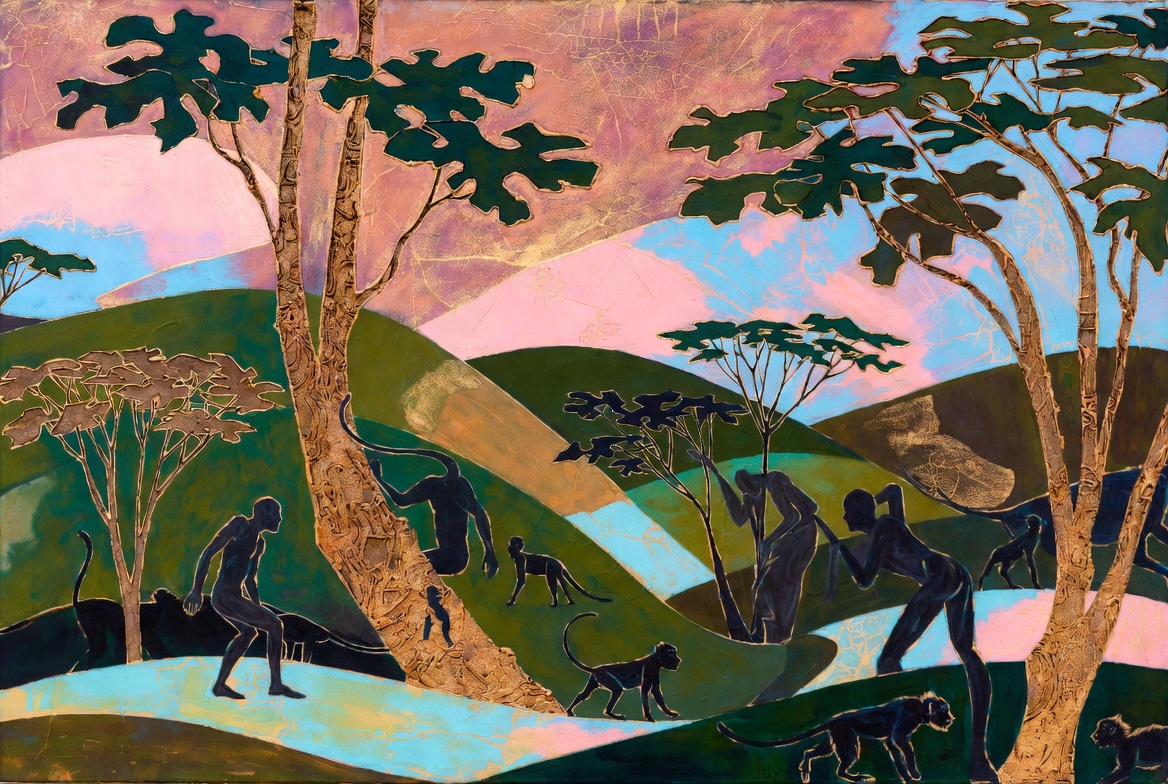
This featured cover image was created with AI assistance (Grok Imagine) to artistically interpret and visualize the themes, color palette, and material qualities central to Michael Armitage’s practice, including his use of lubugo bark cloth and East African motifs. It is not a photograph of a specific artwork and serves purely as an editorial illustration. All factual content in the accompanying article is based on verified sources and traditional journalistic research.


