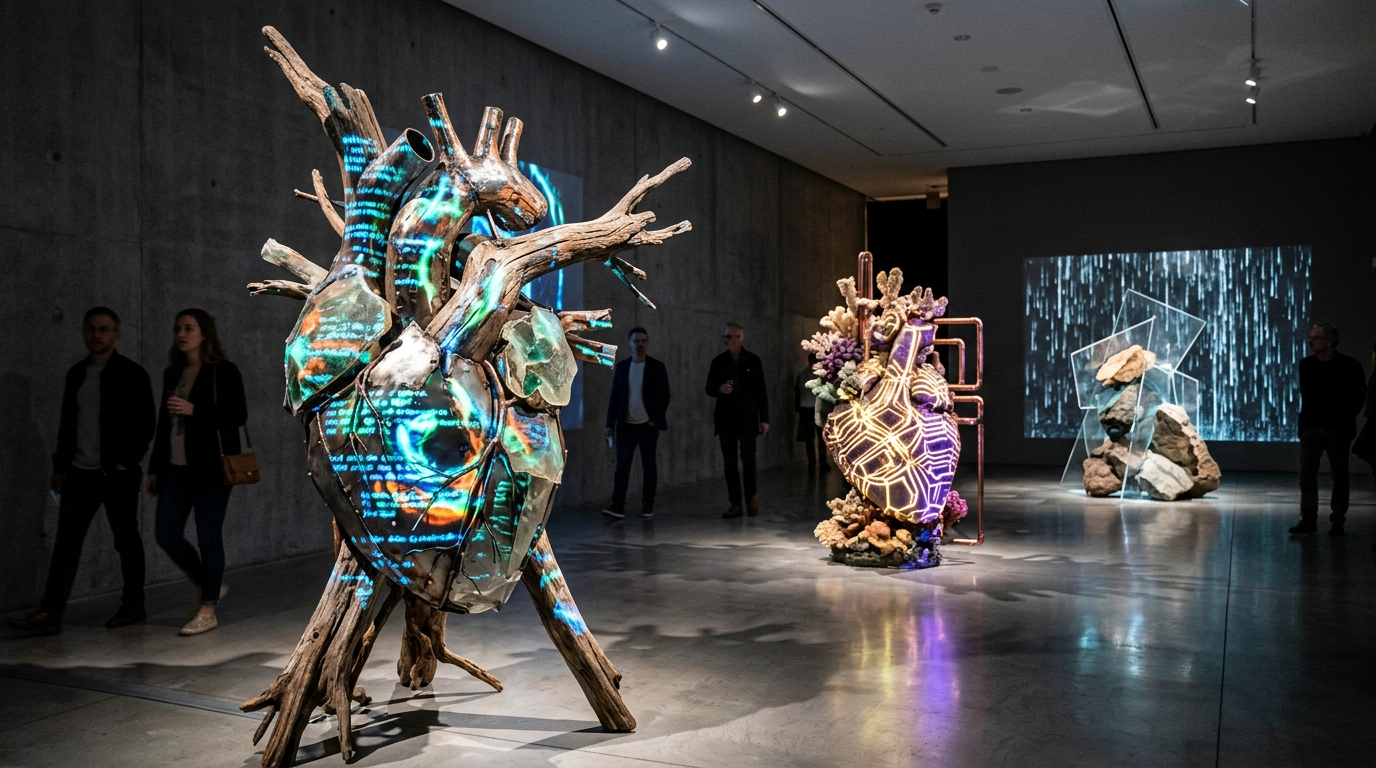
The Rise of Phygital Art: Blending NFTs and Traditional Mediums
By Darren Smith, Arts Reporter
May 8, 2026
In the evolving landscape of contemporary art, a profound shift is underway. Traditional painters and digital-native creators are no longer confined to separate worlds. Instead, they are pioneering hybrid futures that blend physical canvases with blockchain-verified NFTs, creating artworks that exist simultaneously in galleries and on decentralized networks.
This convergence represents more than a trend—it signals a fundamental rethinking of ownership, provenance, and accessibility in the art world. In Brooklyn studios, painters who once relied solely on Chelsea galleries now mint limited-edition NFTs alongside physical editions destined for major art fairs. Across the Atlantic, generative code artists secure prestigious London gallery representation while their algorithms translate into museum-quality prints.
Phygital experiences—a portmanteau of physical and digital—have become the cornerstone of this movement. Collectors can now purchase a work that includes both a tangible sculpture and its blockchain twin, complete with smart contracts ensuring automatic royalties for artists on future resales. This model bridges the gap between traditional art norms and Web3 innovation, offering multiple modes of engagement: physical display in homes, immersive digital viewing, and verifiable provenance that combats forgery.

Institutional validation has accelerated the trend. Major museums like MoMA and the Whitney have acquired significant NFT collections, while fairs such as Art Basel introduced dedicated digital sections featuring hybrid installations. Generative art pioneers see their on-chain works featured in exhibitions alongside established names, proving that digital creation holds enduring cultural value.
For artists, the benefits are transformative. Sarah Meyohas, a conceptual pioneer, seamlessly merges fine art practices with blockchain technology. Traditional creators gain global reach through NFT drops, while Web3 natives access physical gallery networks and collector bases that value tangible objects. Early digital pioneers, once dismissed during market volatility, now thrive as fluid practitioners moving between screens, canvases, and sculptural forms.

Market dynamics reflect this maturity. The European NFT art sector is projected to grow steadily, driven by AI integration and younger collectors who demand utility alongside aesthetics. Galleries like Heft and SuperRare have opened physical spaces, while platforms emphasize long-term collecting over speculation. Hybrid works command attention at fairs, with strong sell-through rates signaling collector confidence.
Challenges remain, including conservation of digital assets and evolving IP frameworks. Yet the momentum is undeniable. Artists are not just adapting to technology—they are shaping it, creating immersive exhibitions that treat art as spatial, interactive, and communal.
As the art world moves beyond the hype cycles of the past, hybrid futures promise a more inclusive, resilient ecosystem. Traditional institutions gain fresh vitality, while Web3 innovators find stability through real-world connections.
Explore more at Right Click Save for the A-Z of Digital Art 2026, or dive into market insights via Blockchain Council. Discover pioneering works at Forbes digital art coverage and institutional highlights on Observer. Check upcoming exhibitions at bitforms gallery.
What’s next? Support emerging hybrid artists by visiting local galleries, collecting thoughtfully on platforms like OpenSea, or attending events like NFT.NYC. The future of art is being forged today—join the conversation and own a piece of it.
Cover image is Ai generated


