
Eunjo Lee: Rising Star in Digital Art
In an era where technology and ecology collide, South Korean-born artist Eunjo Lee is crafting immersive digital worlds that challenge our understanding of interconnectedness. Based between London and Seoul, the 30-year-old filmmaker and animator has emerged as one of the most compelling voices in contemporary art, blending mythological storytelling with cutting-edge 3D animation to explore themes of rebirth, co-evolution, and the spirituality of digital media.
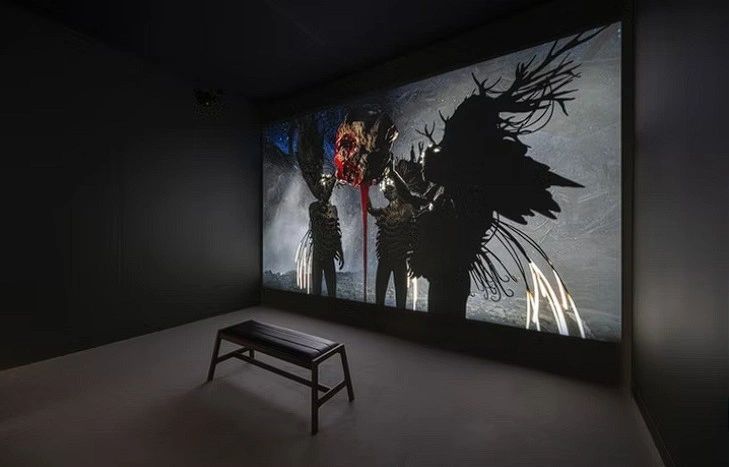
Lee’s breakthrough came swiftly after earning her MFA in Fine Art from the Ruskin School of Art at the University of Oxford, where she won the Mansfield-Ruddock Art Prize in 2024. Building on her Warden’s Prize from Goldsmiths University the previous year, she has transformed academic acclaim into institutional and market momentum. Her 2025 solo exhibition at Goldsmiths Centre for Contemporary Art, “Before the Shadow Taught the Sun,” marked her institutional debut with a mesmerizing digital installation that drew widespread praise for its innovative use of Unreal Engine to depict post-human landscapes.
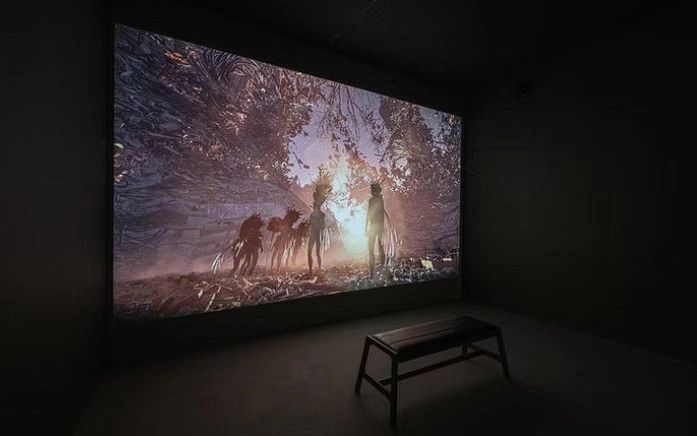
Critics highlight Lee’s cinematic trilogy as a standout achievement. The series—comprising “Hesapia” (2023), “The Lullaby of the Ruins” (2024), and “When Forgiving the Sunlight” culminating in “Before the Shadow Taught the Sun” (2025)—imagines a future where ruins renew, stones mourn, and machines possess nerves. These works dissolve boundaries between human, non-human, and technological entities, proposing a “contemporary mythology” that reframes environmental collapse through cycles of death and rebirth.
Artnet named Lee among the eight artists poised to break out in 2026, citing her Frieze London Focus section presentation and upcoming commissions. Curator Carrie Chan of the Victoria and Albert Museum praised Lee’s “new visual language” created via gaming software, while her representation by Niru Ratnam Gallery has amplified her reach. In early 2026, Lee premiered a new moving image commission by Hervisions at Shoreditch Arts Club, further solidifying her exploration of ritual, desire, and digital culture.
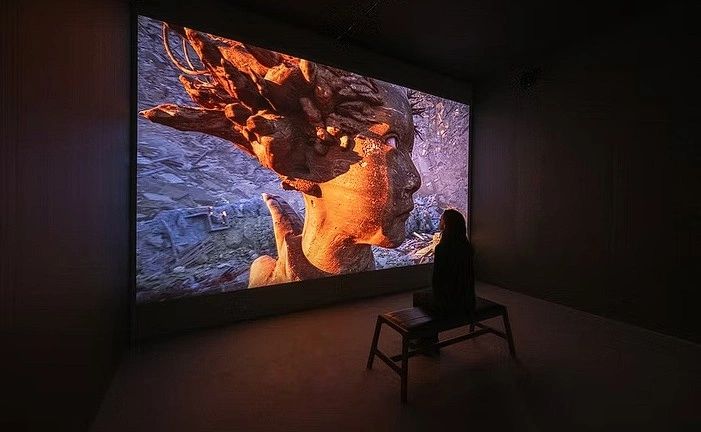
Lee’s practice emphasizes relational vitality: using tools like Blender and Unreal Engine, she builds VR experiences and films that infuse consciousness into the digital realm, turning technology into a co-conspirator with nature rather than its adversary. As biennials and foundations eye her for 2026 projects—including collaborations with LAS Art Foundation and Google Arts & Culture Lab—Lee’s work signals a shift toward ecologically attuned digital narratives.
With her blend of theoretical depth and visual spectacle, Eunjo Lee is not just participating in the conversation—she is helping redefine it.
For inaccuracies, contact Darren Smith.


