Venice’s San Giacomo in Paludo: A Former Gunpowder Island Becomes a Sustainable Art Oasis
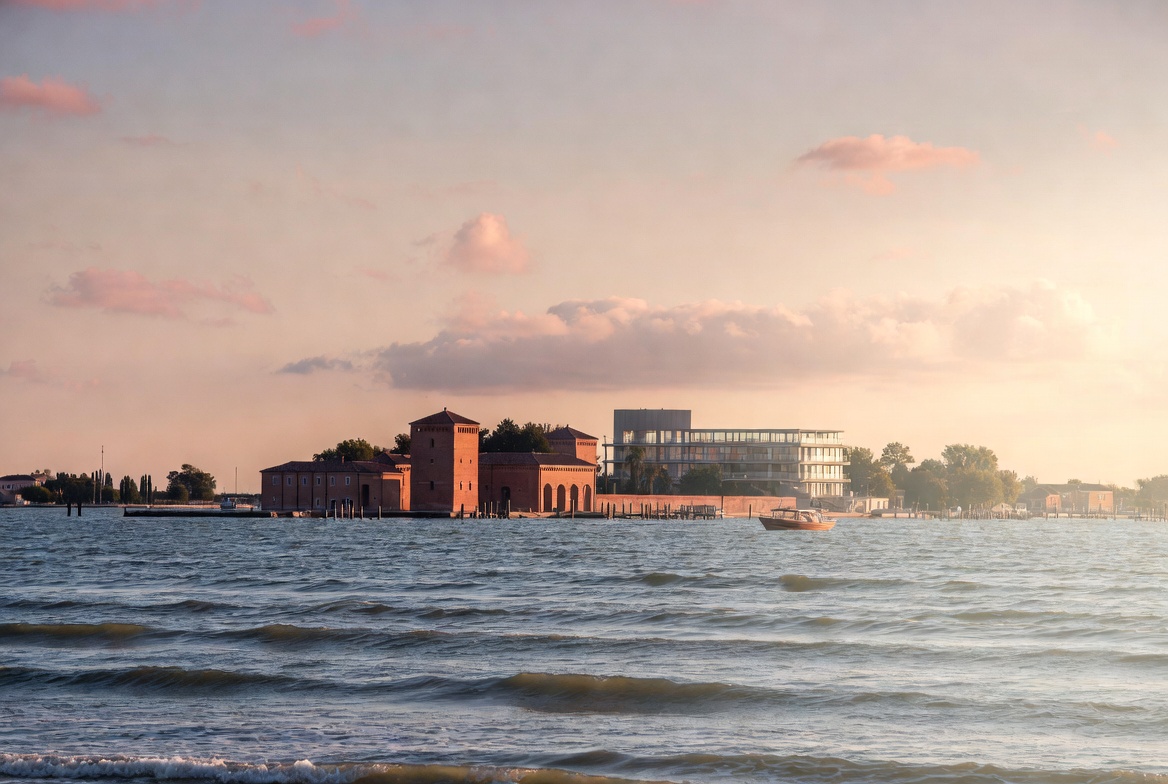
By Darren Smith, Arts Reporter – April 24, 2026
In the serene yet fragile expanse of the Venetian Lagoon, midway between the colorful glassmaking isle of Murano and the lace-trimmed Burano, lies Isola di San Giacomo in Paludo. This small, 12,500-square-meter patch of land—roughly 130,000 square feet—has long whispered tales of monastic solitude, Napoleonic militarism, and decades of abandonment. Now, it is poised for a remarkable rebirth as Venice’s newest contemporary art oasis, one that marries cutting-edge artistic vision with rigorous environmental stewardship.
On May 7, 2026, the Fondazione Sandretto Re Rebaudengo will officially inaugurate its third permanent venue on the island, expanding its influential footprint from Turin and Guarene in Piedmont to the heart of the lagoon. Led by visionary collector Patrizia Sandretto Re Rebaudengo and her husband Agostino, the project transforms a site once dedicated to storing explosives into a fully self-sustaining laboratory for art, ecology, and reflection on climate change.
The story of San Giacomo in Paludo is layered with history. Originally home to a monastery dedicated to St. James, the island saw its religious structures largely demolished during the Napoleonic era. In 1810, three sturdy powder magazines were constructed as part of a military garrison. Over the following centuries, the island served as a waystation for sailors and pilgrims before falling into disuse after the 1960s. Its brick buildings stood silent amid the lagoon’s tides, vulnerable to erosion and neglect.
In 2018, the Italian state sold the island to the Re Rebaudengo family with a clear mandate: repurpose it for cultural ends, with no allowance for commercial hotel development. Restoration work began in earnest, focusing on preserving and adapting the historic powder magazines while addressing the island’s environmental challenges. New trees have been planted to restore a more natural landscape, and the project incorporates principles of energy transition and sustainability at every level.

Patrizia Sandretto Re Rebaudengo, whose foundation has championed emerging and established contemporary artists since its founding in 1995, sees the island as more than an exhibition space. “We like to think that all the layers that make up this tiny islet will re-emerge, with their own character,” she has said in earlier interviews about the project. The island will host exhibitions, performances, artist residencies, research activities, and discussions spanning art, music, cinema, and theater—all while serving as a living experiment in ecological responsibility.
The inaugural program on May 7 reflects this ambitious fusion. A dedicated boat service will ferry visitors from the Giardini during the opening window of 2–4 p.m. (spots filled quickly, underscoring intense interest). Highlights include:
- Fanfare/Lament, a solo exhibition and performance by British artist Matt Copson, curated by renowned Hans Ulrich Obrist, featuring music composed by Oliver Leith. The work blends visual and sonic elements in a site-responsive manner.
- Don’t have hope, be hope!, an exhibition drawing from the extensive Sandretto Re Rebaudengo Collection, which numbers over 1,000 works and emphasizes dialogue with younger generations of artists.
- A photographic documentation titled Isola di San Giacomo 2022–2026, a story in images, by Giovanna Silva and Antonio Fortugno, chronicling the island’s physical and conceptual transformation.
Outdoors, site-specific installations engage directly with the lagoon environment: Goshka Macuga’s GONOGO (a rocket-like form inviting reflection on planetary futures), Pamela Rosenkranz’s Old Tree (Pink Seas), Claire Fontaine’s Patriarchy = CO₂, Thomas Schütte’s Nixe, Hugh Hayden’s Huff and a Puff, and Mario García Torres’ imaginative piece referencing Alighiero Boetti. These works underscore themes of ecology, power, and human intervention in nature.

This opening coincides with the run-up to the 61st International Art Exhibition of La Biennale di Venezia (opening May 9, 2026, curated by Koyo Kouoh under the title In Minor Keys), positioning San Giacomo as a compelling off-site destination that enriches Venice’s year-round cultural calendar. The island will initially open to the public during major exhibition periods and by reservation for guided group tours, ensuring thoughtful management of visitor impact on its delicate ecosystem.
Sustainability is not an afterthought but the project’s core. The island aims to be fully self-sustaining, incorporating renewable energy solutions and serving as a “laboratory for ecological reflection.” By integrating the lagoon’s fragile environment into artistic programming, the foundation hopes to spark meaningful conversations about climate change, energy transition, and humanity’s relationship with nature. Tree planting and careful landscape redevelopment seek to heal past environmental strains while creating a verdant setting for future installations and residencies.
The project also includes plans for two larger exhibition spaces, artist residencies, and even a private residence for the Re Rebaudengo family, though public cultural programming remains the priority. Earlier previews during previous Biennales—such as performances by Eun Me-Ahn and Jota Mombaça—offered tantalizing glimpses, with rosy smoke clouds and kinetic works drawing water-taxi loads of curators, collectors, and critics to the remote site.
Art critics and observers have hailed the initiative as a bold model for private patronage in the 21st century. In an era when rising seas threaten Venice itself, repurposing an abandoned military outpost into a forward-thinking cultural and ecological hub feels both poetic and pragmatic. The powder magazines, once symbols of destruction, now house creative possibility.
Patrizia Sandretto Re Rebaudengo ranks among the most influential figures in contemporary art (placing high on lists such as ArtReview’s Power 100). Her foundation has long prioritized production and experimentation over mere display. With venues in Turin (a sleek Claudio Silvestrin-designed center), Guarene (with its sculpture park amid vineyards), and now Venice, the Sandretto Re Rebaudengo ecosystem demonstrates a thoughtful, multi-sited approach to patronage that nurtures artists while engaging broader societal questions.

Challenges remain. Access requires boat travel—about 20 minutes from central Venice—raising questions of inclusivity and carbon footprint, which the foundation addresses through sustainable transport considerations and limited visitation. Maintaining the island’s self-sufficiency amid lagoon conditions will demand ongoing innovation. Yet these hurdles align with the project’s ethos: art as a catalyst for real-world problem-solving.
As Venice grapples with overtourism, climate vulnerability, and the need to sustain its unique cultural identity beyond the Biennale’s seasonal frenzy, San Giacomo in Paludo offers a compelling counterpoint. It is a quiet, reflective space where history meets futurity, where brick walls that once safeguarded gunpowder now frame meditations on hope, ecology, and human creativity.
The island’s transformation embodies a profound optimism: that even sites marked by abandonment and militarism can be reclaimed for beauty, dialogue, and planetary care. In the words evoked by one of the inaugural works, it invites us not merely to hope, but to be hope.
Visitors and art enthusiasts eager to experience this unique convergence of art and sustainability should monitor the Fondazione Sandretto Re Rebaudengo website for updates on guided tours, future exhibitions, and reservation details. With the 2026 Venice Biennale approaching, San Giacomo promises to be one of the most talked-about destinations in the lagoon.
Plan your visit or support contemporary art initiatives that prioritize both creativity and environmental responsibility—places like San Giacomo remind us that culture and conservation can, and must, advance hand in hand.
Darren Smith is an arts journalist, practicing artist, and tattooist with 26+ years of experience across traditional, digital, and body art practices. He covers the intersections of craft, culture, and collecting for ArtChain News.
This article draws on verified reporting from the Fondazione, The New York Times, Finestre sull’Arte, and related sources for accuracy and depth.
Featured image created with Grok Imagine (xAI). This is an AI-generated artistic rendering of Isola di San Giacomo in Paludo and does not depict a real photograph of the island.
